
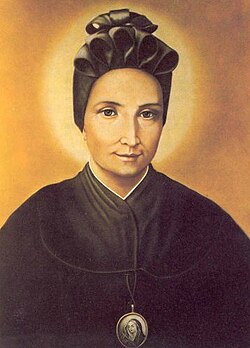
Early Life
Born on March 1, 1774, in Verona, Italy, Magdalene was the third of six children in a noble family. Her father died when she was just five years old, and her mother soon remarried, leaving Magdalene to be raised by an uncle who ensured she received a good education. At fifteen, she felt drawn to religious life and even tried entering the Carmelite convent. However, she soon discovered her true calling: to serve Christ in the poor, the sick, and the abandoned—without the walls of a cloister to limit her mission.
A Time of Upheaval
When Magdalene was fifteen, the French Revolution erupted, shaking all of Europe. Its effects reached Verona in 1796, when Napoleon Bonaparte entered the city as a conqueror. The following year, Napoleon was received at the Canossa Palace, with Magdalene, as lady of the house, welcoming him. He would return in 1805 and 1807 as Emperor. Yet by then, Magdalene had already chosen a very different path—dedicating herself to the service of those most in need.
The Birth of a Charism
Magdalene began organizing charitable works, especially for the sick, the wounded, and, above all, young girls left in poverty or abandoned. Moved by the stark divide between the rich and the poor, she gave herself entirely to the service of children, youth, and women who suffered not only material poverty but also moral, spiritual, and emotional abandonment.
In 1808, she left the comforts of the Canossa Palace behind and settled in the poor district of San Zeno with a small group of companions. They were not cloistered nuns but women of prayer and action, contemplatives on the streets. Magdalene called them the Daughters of Charity, because their mission was to reveal God’s love through concrete acts of service to humanity.
Missionary Spirit
Magdalene’s heart burned with missionary zeal. She often said she was willing to go anywhere and do anything so that Jesus might be known and loved. Though she herself never went abroad, her spirit spread far beyond Verona. By the time of her death on April 10, 1835, there were already five houses of Canossian Sisters across Italy.
Her charism continued to grow: in 1821, the Canossian Sons of Charity (priests and brothers) were founded, and in time, lay collaborators joined as well, forming the broader Canossian Family. Today, Canossians are present on every continent, serving Christ in the poor through education, healthcare, and pastoral ministry.
Canonization
On October 2, 1988, Pope St. John Paul II declared Magdalene of Canossa a Saint, honoring her as a Prophet of Charity. Her legacy endures wherever Canossians reveal the love of God, “making Jesus known and loved.”